Where the Honey Comes with a Story
At an outdoor market, the person handing you a sample of honey is usually the same person who kept the bees. That directness between maker and buyer is something students rarely encounter in any other retail setting, and it gives this vocabulary a personal quality that is genuinely hard to replicate.
Market stall vocabulary is also highly sensory. The smell of fresh herbs on a wooden table is the kind of detail that pulls students into a scene they can picture clearly, which makes new words easier to absorb and harder to forget.
A good question to put to your class: “Think about a market you have visited, or one you have seen in a film or on TV. What do you remember most about it?” It works for students who have never set foot in a farmer’s market as well as those who grew up going to one every Sunday morning.
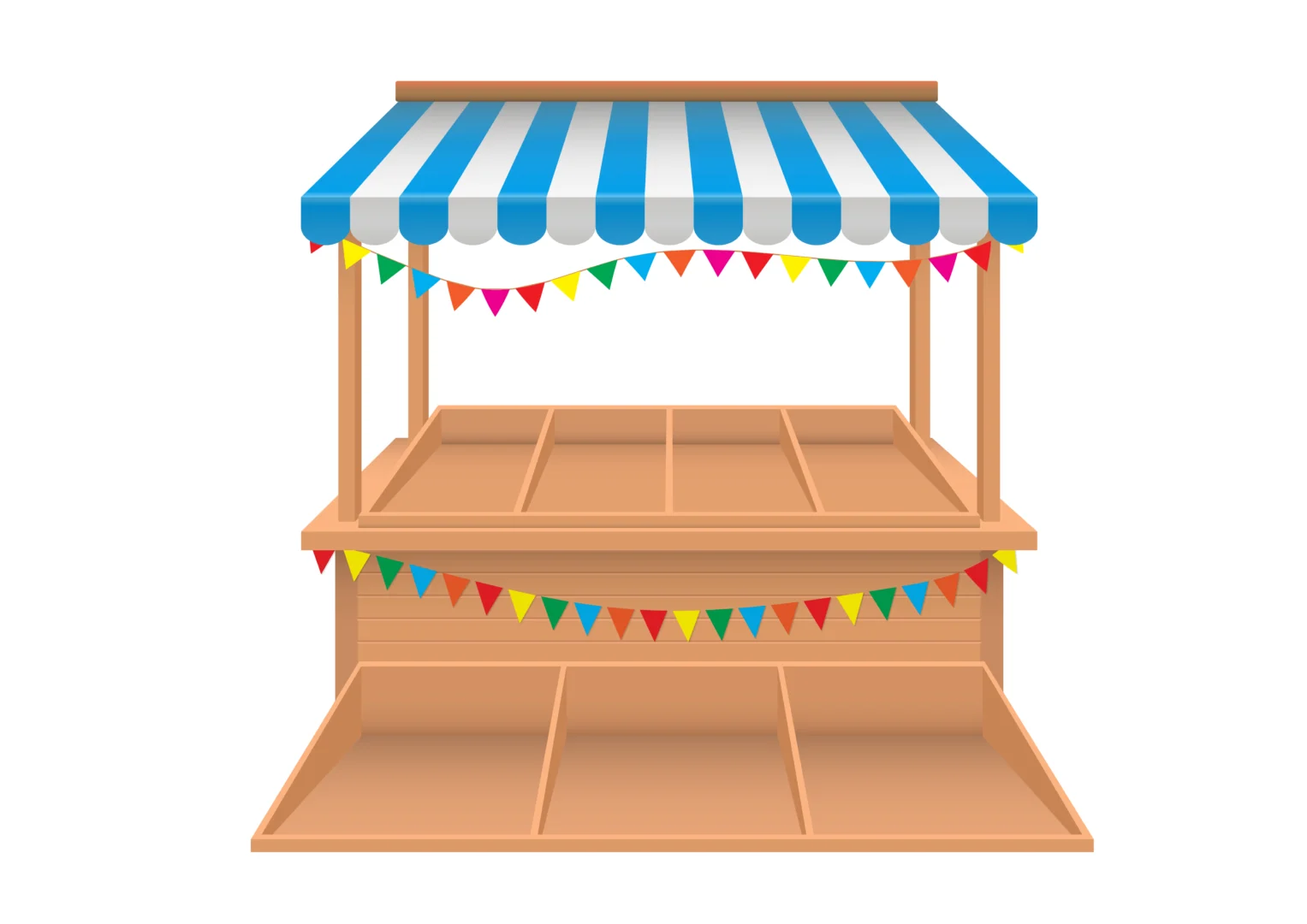
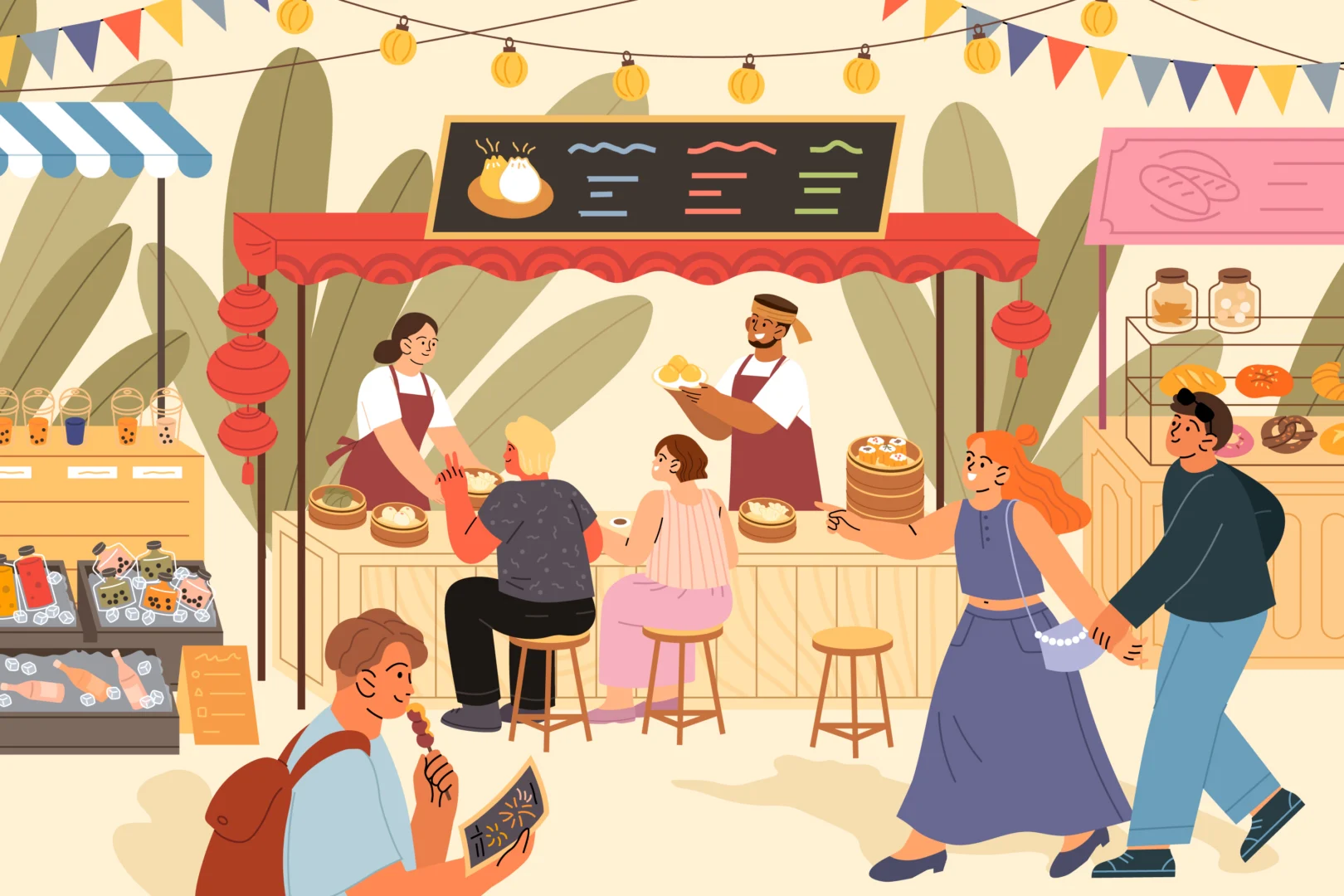
There is also a cultural richness to outdoor markets worth exploring with students. A pennant above a stall and a cooler sitting underneath tell you something about where the market is and who it is for. That variety gives teachers a natural opening for cross-cultural discussion.
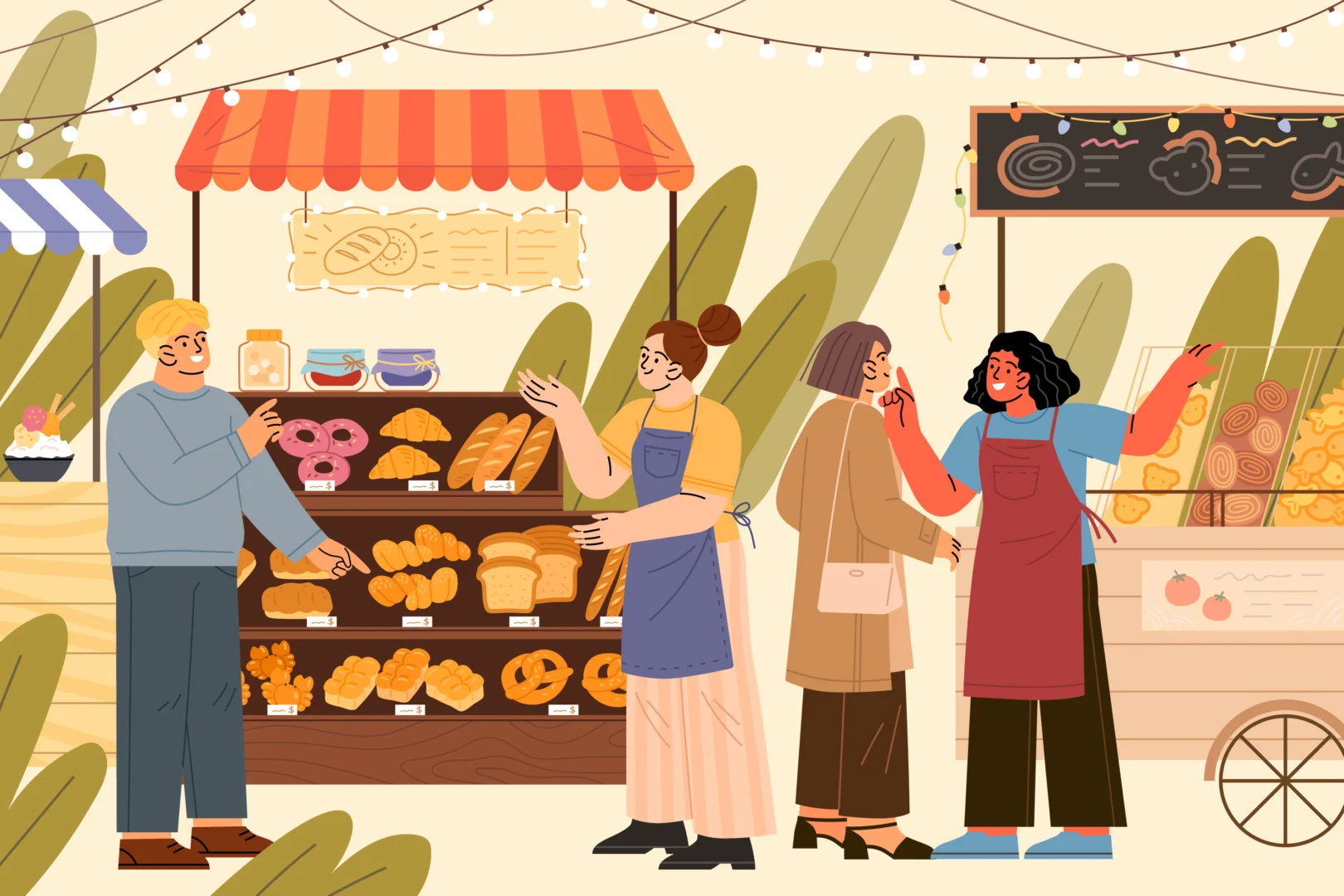
A market stall asks something of students that a supermarket aisle never does. It asks them to actually talk to someone. There is no self-checkout to hide behind, no label to read instead of speaking. That small conversational demand is exactly the kind of low-stakes practice that builds real confidence over time.