The Chandelier Was the Easy Part
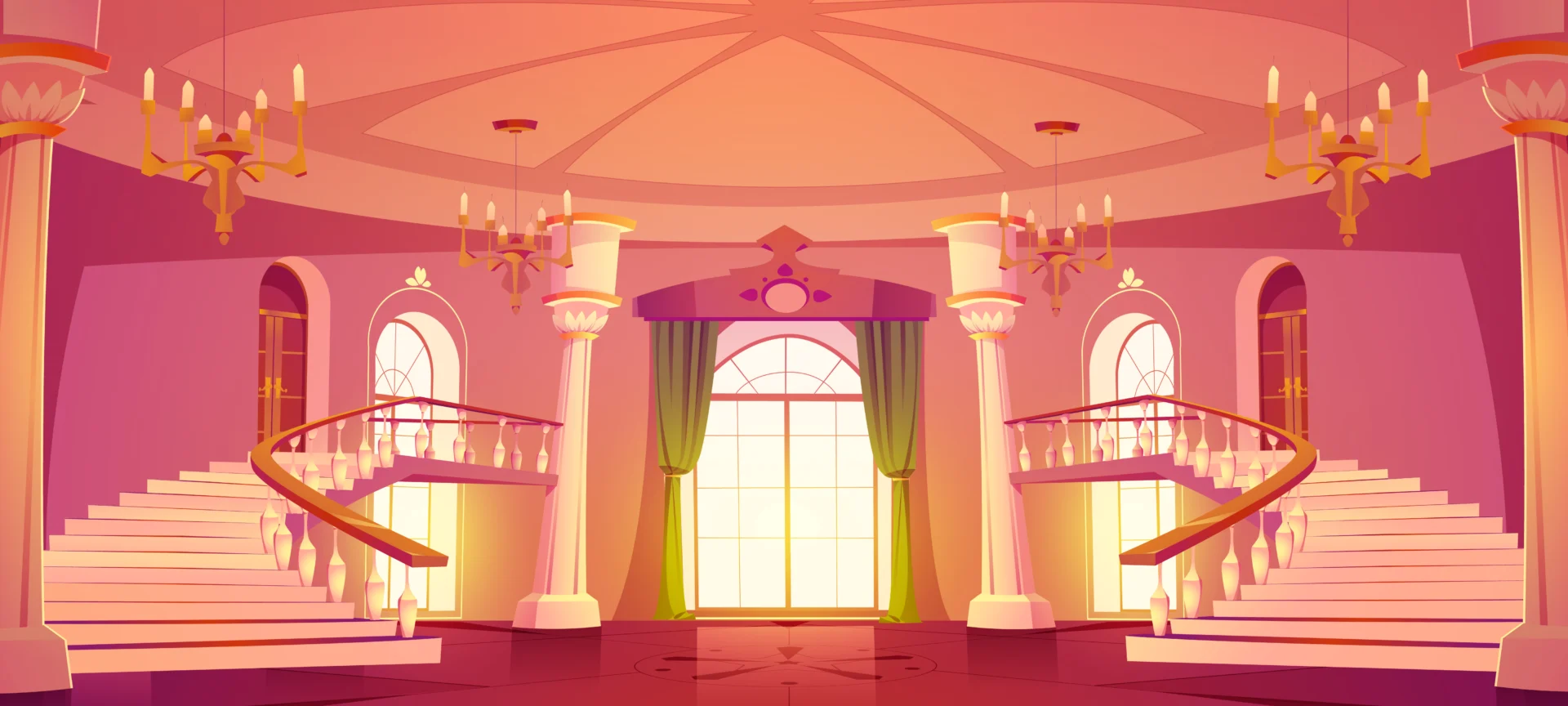
A grand hall does not happen by accident. Every object in it was placed there deliberately to communicate something specific about the people who built it. The chandelier alone can cost more than most people earn in a year. Even a single candelabra on a side table is making a point.
That deliberate quality gives grand hall vocabulary an analytical dimension that most other interior spaces simply lack. Every object has a reason for being exactly where it is. Getting students to ask why the throne sits where it does, or why the coat of arms hangs above the fireplace rather than beside it, opens up a level of critical thinking that goes well beyond the objects themselves.
Grand hall vocabulary also bridges the gap between history and language in a way that few other topics manage. A tapestry on the wall might record a battle that happened centuries ago. A mosaic underfoot might be older than the building around it. These objects carry history, and teaching students to name and describe them gives language learning a sense of depth that is hard to replicate elsewhere.
A question that works particularly well with this topic: “If you could add one object to this grand hall, what would you choose and why?” It pushes students to think about symbolism and personal significance, and the answers are almost always genuinely surprising.
A grand hall is designed to make a visitor feel small. The canopy above the throne and the fountain at the centre of the room are not there for comfort. They are there to remind the visitor of their place. A student who can name and describe these objects is already doing something more sophisticated than vocabulary recall. They are reading architecture, and that is a skill that transfers well beyond any single lesson.