The Stakes Are Higher Than in Any Other Room
A doctor’s office is one of the few places people visit not by choice but by necessity. There is a particular kind of anxiety that comes with sitting in a waiting room, number in hand, unsure of what comes next. That shared experience is something almost every student has felt, and it gives this topic an immediacy that is hard to manufacture in a classroom.
The stakes in a doctor’s office are also higher than in almost any other setting on the vocabulary list. A student who cannot describe their symptoms clearly, or who does not understand what a prescription says, is in a genuinely vulnerable position. Getting these words right can make a real difference to the quality of care someone receives.
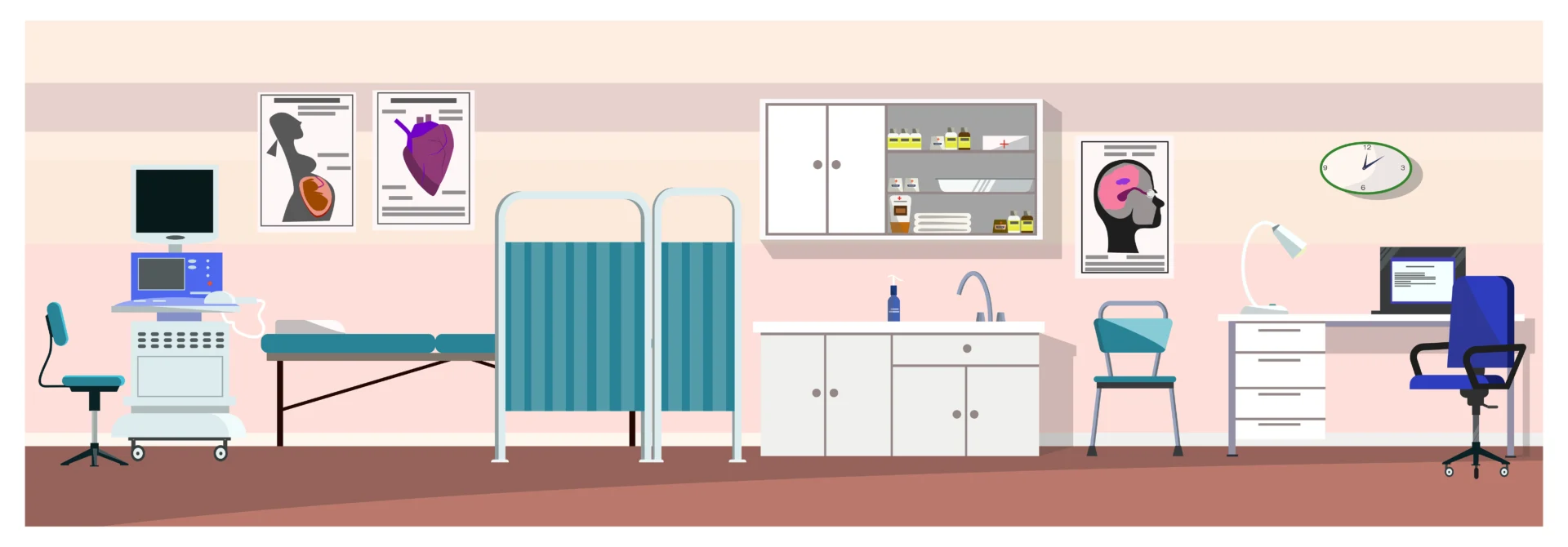
Doctor’s office vocabulary also introduces students to a register of English they rarely encounter elsewhere. An anatomy poster uses terms that most people have never seen outside a medical context, and an eye chart assumes a level of reading fluency that can catch students off guard. Preparing students for that shift in register is a genuinely valuable part of any vocabulary lesson.
A question worth trying with your class: “Think about the last time you visited a doctor. What objects do you remember seeing, and which ones did you not know the name of in English?” That question reveals gaps in vocabulary that students might not have noticed before, and it tends to produce unusually honest and engaged responses.
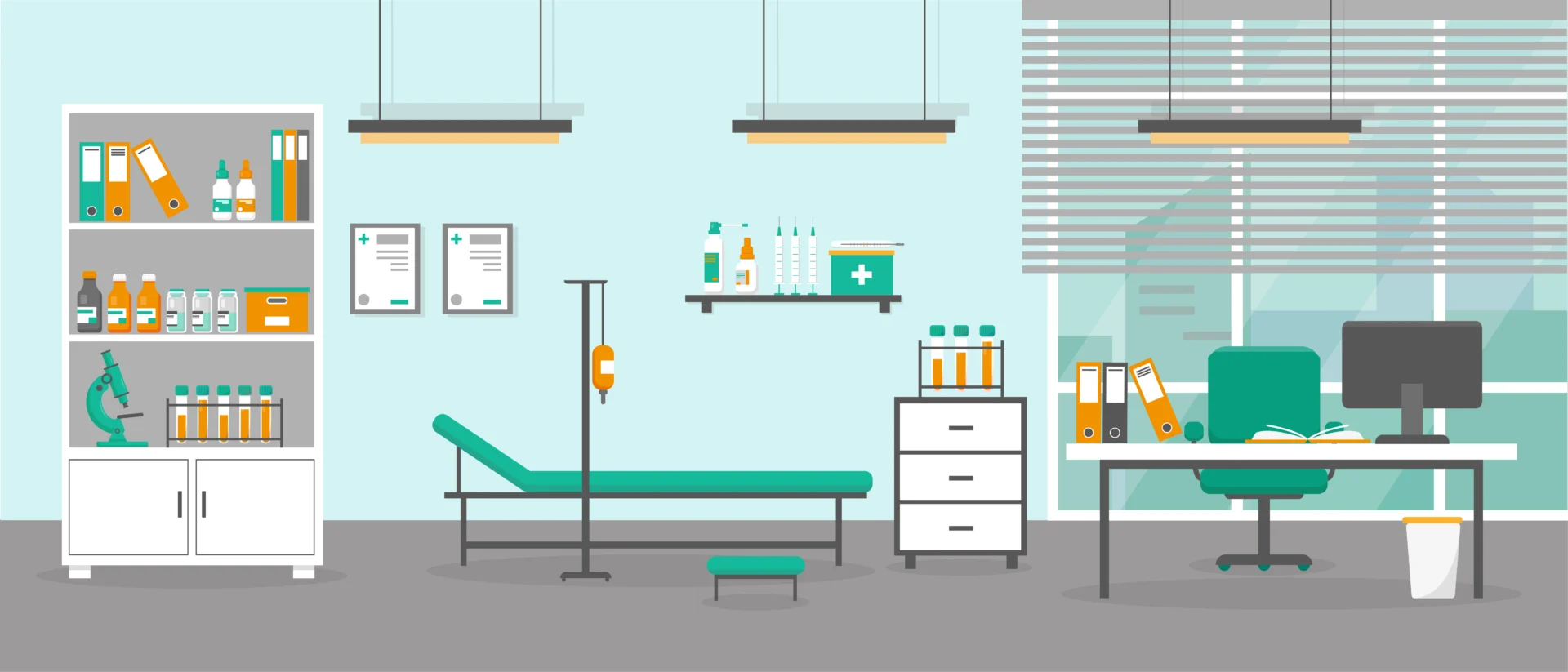
A student who has sat in a doctor’s office without knowing the name of the reflex hammer tapping their knee, or the syringe on the tray beside them, has experienced exactly the kind of vocabulary gap this topic addresses. Being able to name what is happening around you, and communicate clearly when it matters, is one of the most practical things a language lesson can teach.