Miss One Step and the Flight Leaves Without You
An airport is one of the few places where the order of things matters absolutely. Miss a step or arrive at the wrong gate and the consequences are immediate and expensive. That procedural urgency gives this vocabulary a sense of weight that is hard to find in most other settings.
Airport vocabulary is also one of the most internationally standardised sets a student can learn. A boarding pass means the same thing regardless of which country issued it, which makes this one of the most transferable vocabulary sets a student can carry with them.
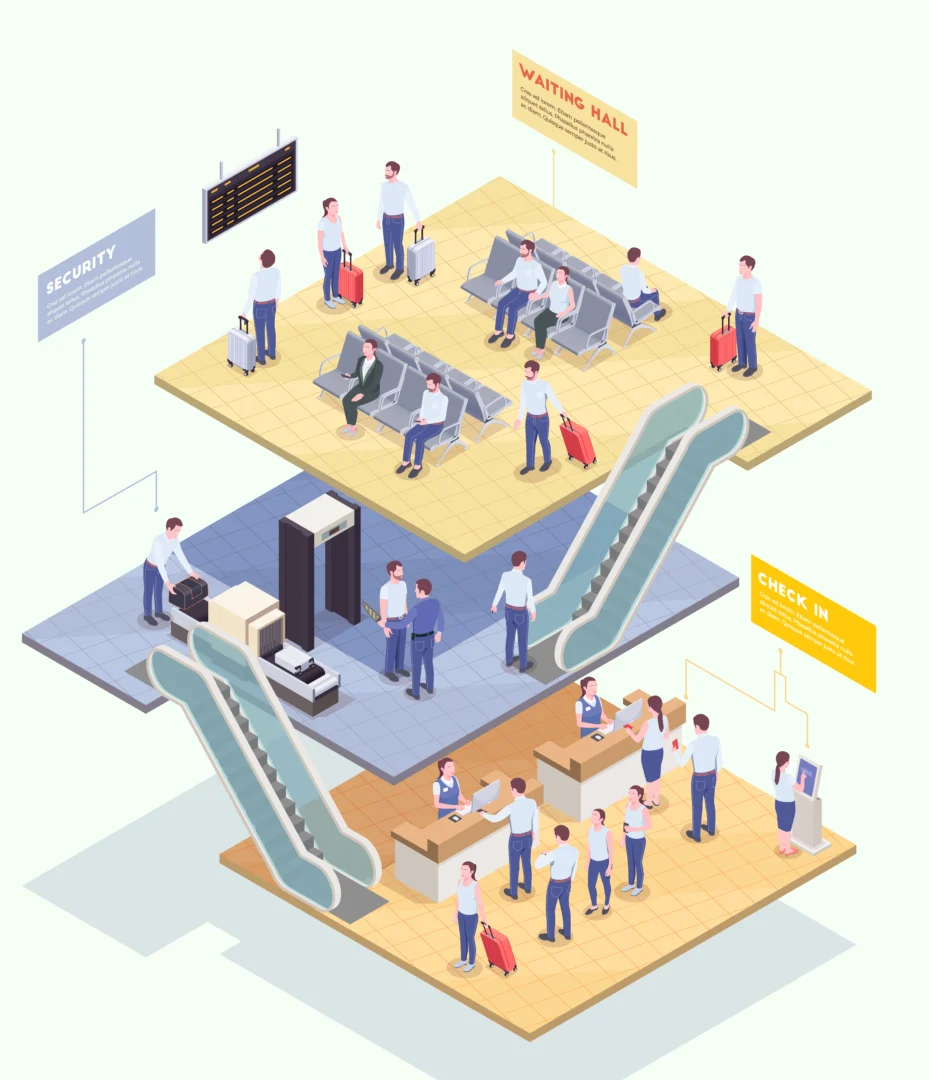
There is also a sequence of checkpoints that students need to be able to navigate in English. The immigration desk and the customs area alone require a level of language confidence that many students underestimate until they are standing in the line. Getting those words right under pressure is one of the most stressful experiences a language learner can face.
A question worth putting to your class: “Think about the last time you were in an airport or watched someone go through one in a film. What steps do you remember, and which ones would you struggle to describe in English?” It is a question that works at any level and tends to reveal exactly how much airport vocabulary students already have and how much they still need.
The duty-free shop and the departure lounge exist in a strange pocket of time that belongs neither to the journey nor to the destination. It is the one moment in an airport where the urgency lifts, and a student who can navigate that space in English, asking for what they need without hesitation, has already done something worth teaching toward.