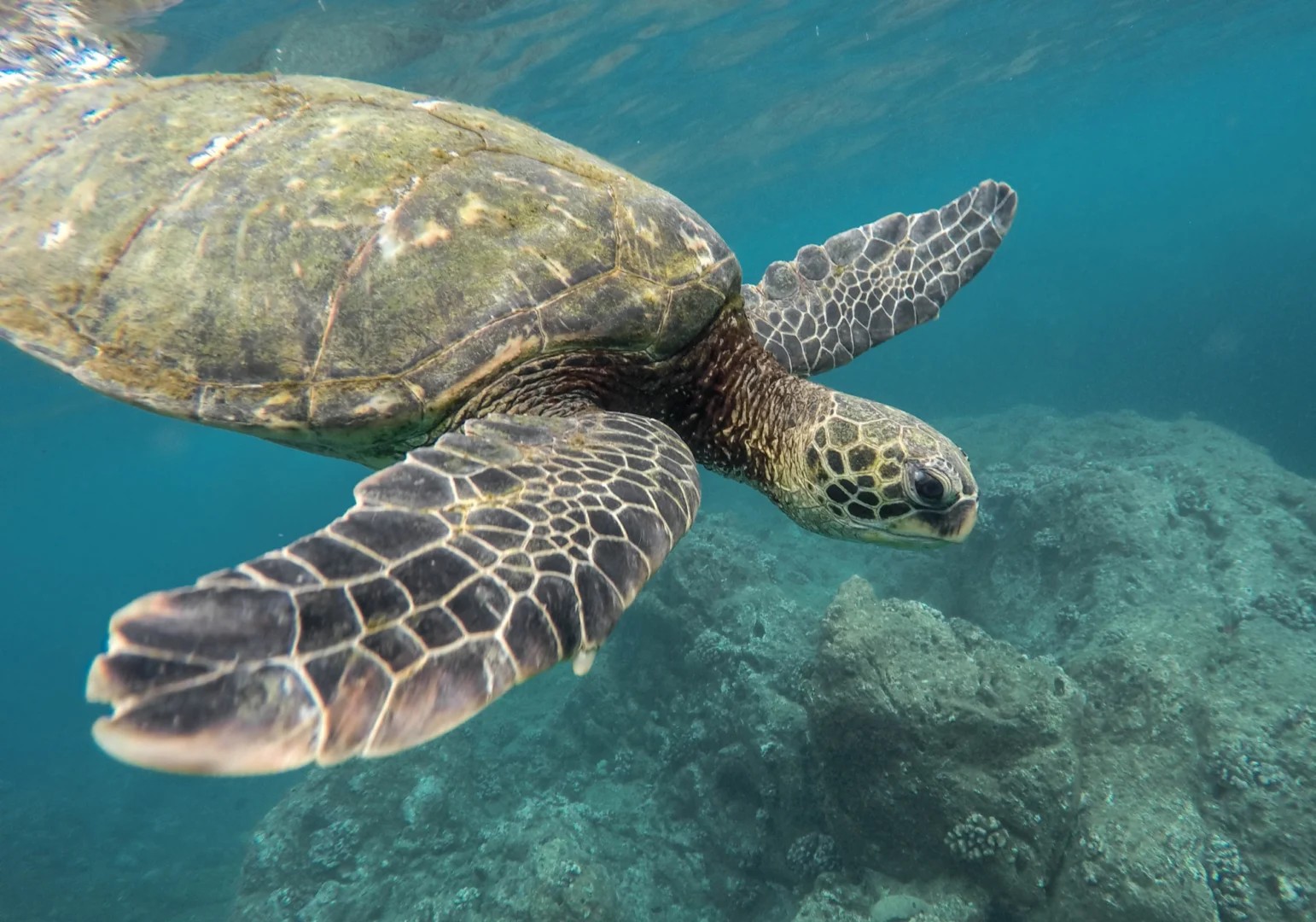
On the afternoon of September 16, someone walking on the beach near Seal Beach, California, saw something that nobody had ever reported there before. A sea turtle had come out of the ocean and was digging a nest in the sand. The beachgoer called the lifeguards, and soon wildlife experts were on their way.
Three days later, it happened again. Another turtle crawled up onto the sand near Huntington Beach Pier, about 13 kilometres (8 miles) away, and laid her eggs. Scientists compared photos of the two animals, looking closely at the shape of their shells and the barnacles on them. They were two different turtles.
Both were olive ridleys, one of the smallest kinds of sea turtle. Adults can weigh up to about 45 kilograms (100 pounds) and grow to around 75 centimetres (2.5 feet) long. They usually lay their eggs much farther south, on beaches in Mexico and Central America. According to NOAA Fisheries, the U.S. government’s ocean science agency, these are the first sea turtle nests of any kind ever recorded on the West Coast of the United States.
Even the experts were surprised. Jeffrey Seminoff, a scientist with NOAA Fisheries, called it “totally unexpected.”
The eggs did not get to stay on the beach for long. A big storm, Hurricane Polo, was sending strong waves toward the coast, and those waves could have washed the nests away. So on September 25, a team carefully dug up the eggs, 204 in all. They were taken to the Aquarium of the Pacific in Long Beach and placed in special containers that copy the conditions of a warm, sandy nest.
Nobody knows for sure why the turtles came so far north. The ocean off Southern California has been warmer than usual this year, and a strong El Niño is expected to follow. Sea turtles use warm water to help them find their way, so these two may have followed it north.
If all goes well, the eggs will hatch in about 45 to 60 days, probably in early November. Not every sea turtle egg hatches, so nobody knows yet how many babies there will be. Those that do hatch will be released on the same beaches where their mothers laid the eggs. Scientists at NOAA say that if some of the young females survive, they could come back to nest on those beaches as adults, about 15 years from now.
Today, October 4, is World Animal Day. Olive ridleys are a protected species in the United States, and these two nests show that animals like them can turn up in surprising new places. Jeff Flocken, the president of the Aquarium of the Pacific, said people will need to “make space” for them, so that threatened species are “given a fighting chance.”
Sources: NOAA Fisheries, CNN, ABC7 Los Angeles, Smithsonian Magazine, Long Beach Post
It was around 3 p.m. on September 16 when a beachgoer near Seal Beach, in California’s Orange County, noticed a sea turtle doing something nobody had ever recorded on the state’s shores: digging a nest. Lifeguards were alerted, and before long, wildlife officials had a genuine scientific puzzle on their hands.
Three days later, it happened again, this time near the Huntington Beach Pier, roughly 13 kilometres (8 miles) down the coast. NOAA biologist Cali Turner Tomaszewicz compared photos of both animals, right down to the barnacles on their backs and the pattern of scales on their shells, and confirmed that two different females had come ashore.
Both were olive ridleys, compact sea turtles that grow to about 75 centimetres (2.5 feet) and 45 kilograms (100 pounds). They are wanderers by nature, but their Pacific nesting beaches stretch from Mexico to Panama, with the closest known sites on Mexico’s Baja California peninsula. According to NOAA Fisheries, no sea turtle of any species had ever been recorded nesting on the U.S. West Coast.
Jeffrey Seminoff, a marine ecologist at NOAA’s Southwest Fisheries Science Center, told ABC7 it was “a totally unexpected, totally different sort of a scenario in the turtle world.”
Their stay on the beach was short. Hurricane Polo was pushing heavy surf toward Southern California, and both nests sat squarely in harm’s way. On September 25, a team of federal and state wildlife officials dug up all 204 eggs and moved them to the Aquarium of the Pacific in Long Beach. There, they are being kept in temperature-controlled containers designed to mimic a sandy nest.
As for why the turtles strayed so far north, scientists have theories rather than answers. The water off Southern California has been unusually warm, and an El Niño is building in the Pacific. Sea turtles rely partly on warm currents to find their way, so the pair may simply have followed the heat. Justin Viezbicke, NOAA’s stranding coordinator for California, has also suggested that hurricanes could have nudged them off course.
Incubation should take 45 to 60 days, which puts any hatching in early November, although not every egg will make it. The hatchlings will be released on the beaches where they were laid. If some of the females survive and return to nest there as adults, roughly 15 years from now, NOAA says this could turn out to be a founding event: the start of an entirely new nesting population.
Today, October 4, is World Animal Day, and the timing is apt. Olive ridleys are protected under the U.S. Endangered Species Act, and, like many animals, they are already responding to changes in the ocean. Jeff Flocken, president of the Aquarium of the Pacific, said humans “will need to adapt and make space” so that threatened species are “given a fighting chance.”
Sources: NOAA Fisheries, CNN, ABC7 Los Angeles, Smithsonian Magazine, Long Beach Post