The Space That Is Entirely, Unavoidably Yours
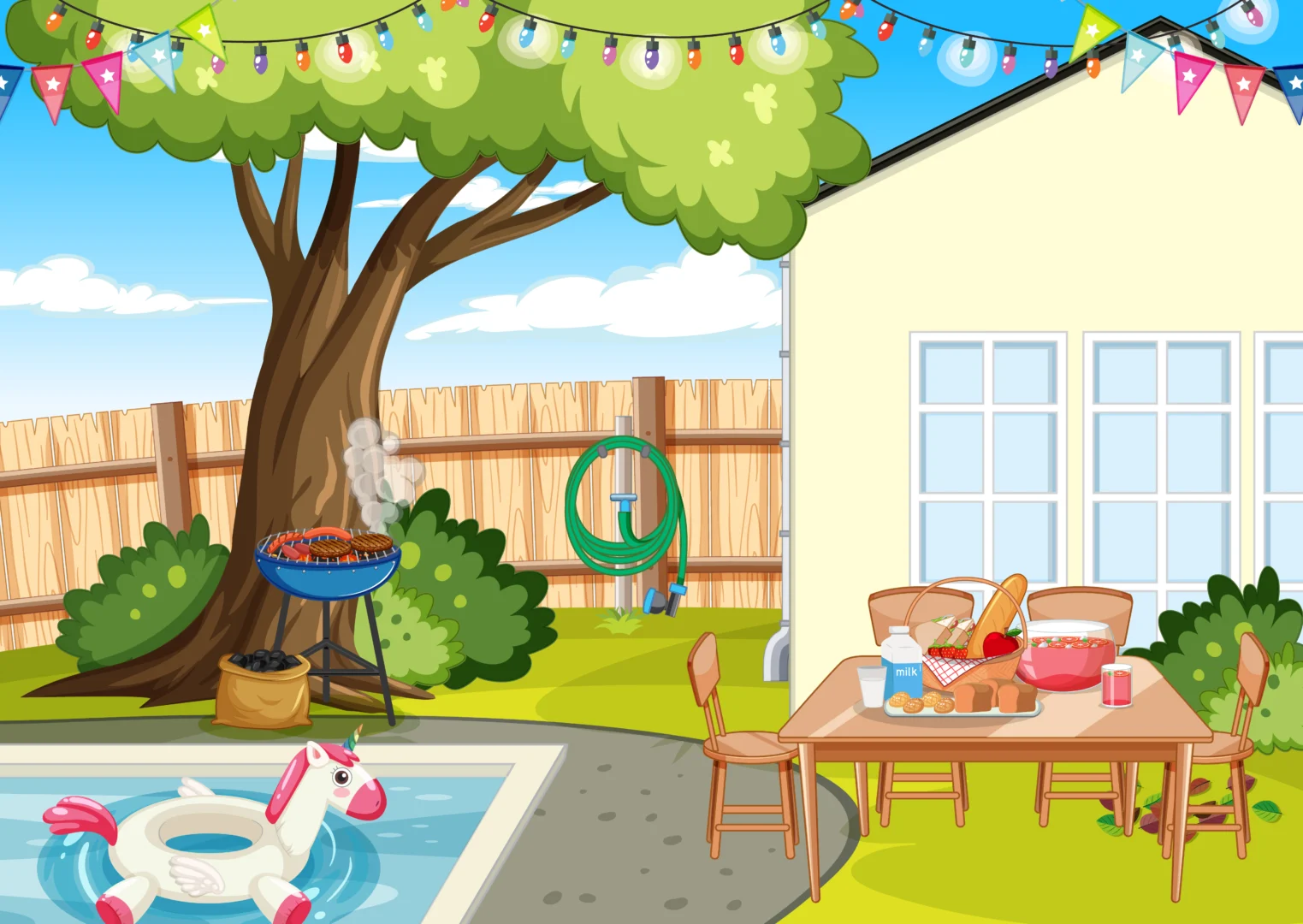
Open any backyard gate and you are stepping into something that belongs entirely to the people inside that house. Every object in it was chosen, placed or simply left there by someone specific. And unlike a park or a public garden, there is no groundskeeper coming on Monday morning to sort it out.
That sense of ownership is what makes backyard vocabulary so personally engaging for students. A watering can by the flowerpots, a shed with a broken latch that someone keeps meaning to fix. These are not neutral objects. They carry the personality and the procrastination of whoever lives there.
A backyard also changes with the seasons in a way that very few other spaces do. The paddling pool comes out in July and disappears by September. The rake makes its annual appearance when the leaves start falling. That seasonal rhythm gives teachers a natural way to connect backyard vocabulary to time, weather and the passing of the year.
Something worth trying with your class: “If you had a backyard and one free weekend, what would you actually do with it?” The question works whether a student has a backyard or has never had one, and the answers reveal a great deal about how students think, plan and express themselves in English.
What makes the backyard genuinely distinct from every other outdoor space on the vocabulary list is that it answers to one person. The barbecue either gets used or it does not. The hammock either gets hung up or it stays in the shed. The lawnmower either comes out on Sunday or the grass keeps growing. That accountability, quiet and personal and entirely unshared, is something students immediately understand regardless of where they grew up.