Napkins, Centerpieces, and the Language of Sharing a Meal
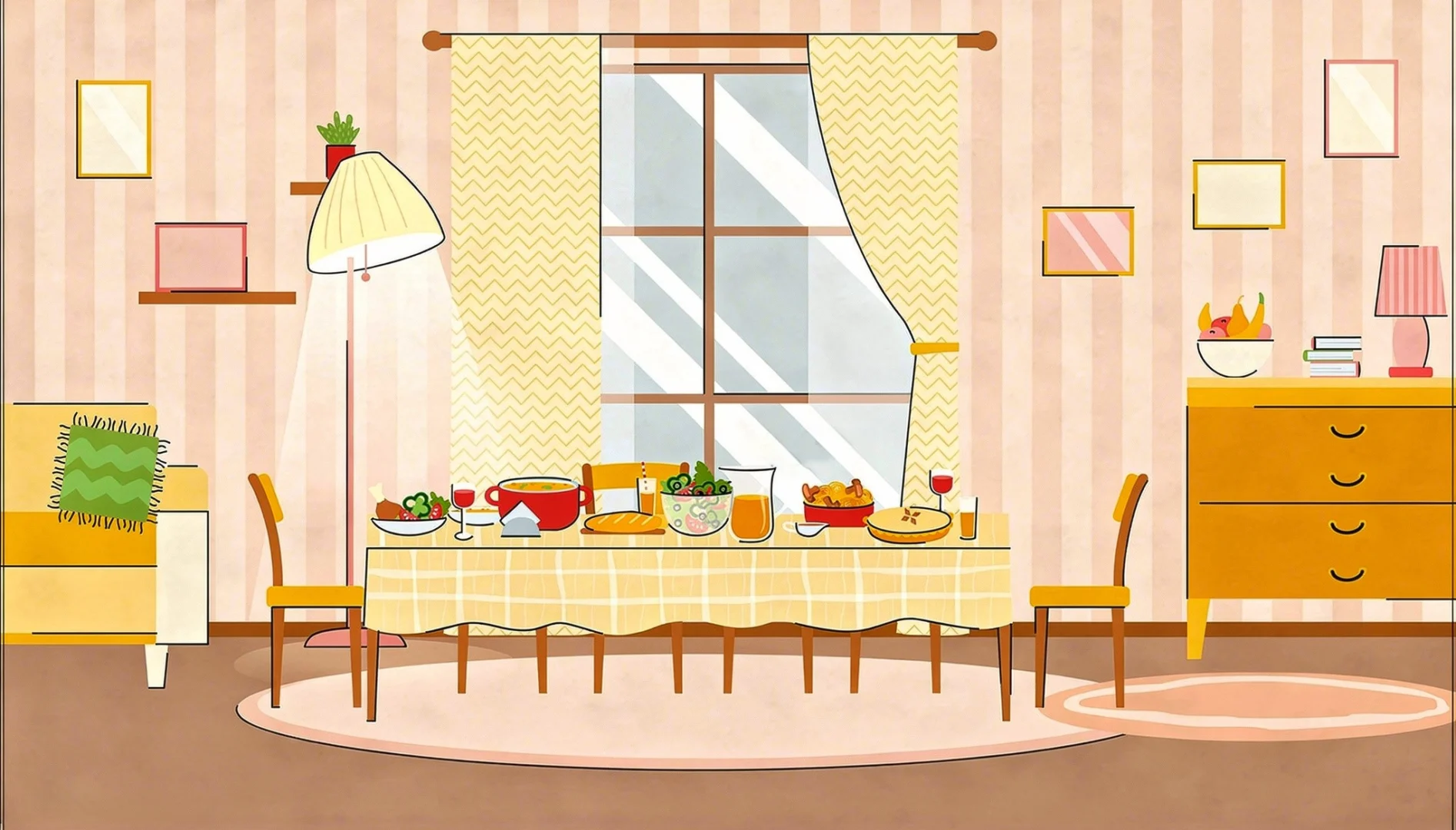
There is something about a dining room that feels ceremonial. The dining table is set, the chandelier is on, and for a moment before anyone sits down, everything looks exactly the way it is supposed to. For students learning English, that moment is packed with vocabulary that connects language to one of the most universal human experiences there is: sharing a meal with other people.
Dining room vocabulary sits at an interesting crossroads. Some of it is purely practical: the fork on the left, the knife on the right, the napkin on the lap. But some of it carries cultural weight that goes far beyond the object itself. A lazy Susan in the middle of the table, for example, is not just a rotating tray. It is a conversation starter, a cultural reference, and a genuinely useful piece of vocabulary all at once.
The formality of dining room language is also worth exploring with students. The difference between a cup and a wine glass, between a bowl and a fruit bowl, between a tablecloth and a bare table tells students something about register and context in English. Knowing when a setting is casual and when it is formal is a social skill, and language is a big part of that.
Ask your students this: “Think about the most memorable meal you have ever shared with someone. Where were you sitting, what was on the table, and what made it special?” That question connects vocabulary directly to personal memory, which is one of the most reliable ways to make new words stick.
A sideboard against the wall, a centerpiece in the middle of the table, salt and pepper shakers within easy reach. These are small details, but they are the details that make a dining room feel like more than just a room with a table in it. Teaching students to notice and name those details is teaching them to pay attention to the world around them in English.