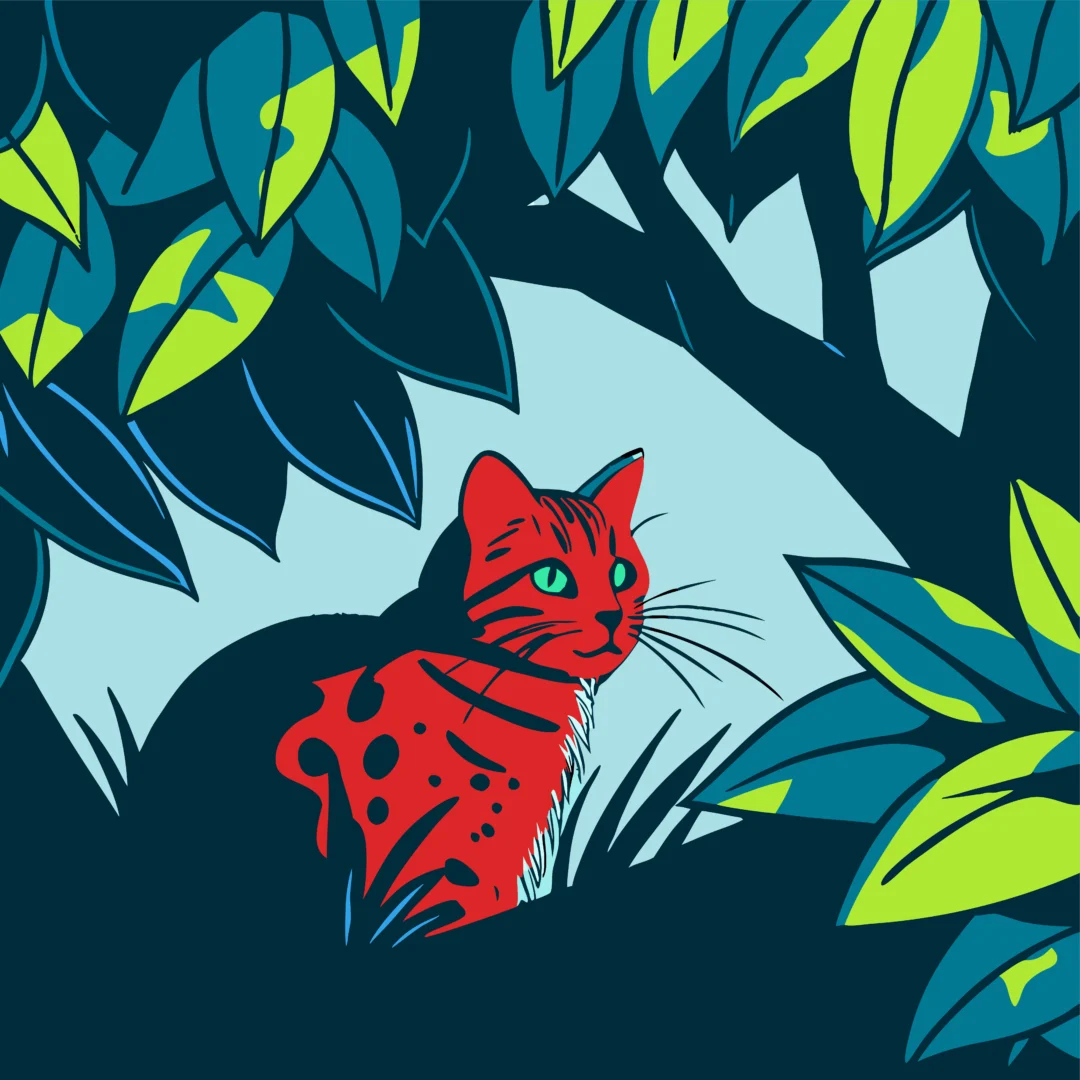
For more than 100 years, scientists did not name a single new kind of wild cat. That changed this month. A team of researchers says a new species has been living quietly in the cloud forests of Bolivia, in South America.
The cat is called Leopardus tilcayo. “Tilcayo” is the name local people in the area already use for it. The scientists chose to keep that name out of respect for the communities who have lived near the cat for a long time.
The new cat is very small. Its body is about 46 centimetres (18 inches) long, not counting the tail, and it weighs around 1.4 kilograms (3 pounds). That makes it smaller than most pet cats. It has light brown fur with big dark spots, so it looks a little like a tiny leopard.
The story started at Senda Verde, an animal refuge (a safe home for rescued animals) in Bolivia’s Yungas region. A colleague of Bolivian biologist Paola Nogales-Ascarrunz noticed an unusual cat there and told her about it. When she saw him, she was surprised by his size. “He really is tiny,” she told reporters. The cat is a male, about 10 years old, and he has lived at the refuge since 2017.
Looking at the cat was not enough to prove it was a new species. Small spotted cats in South America, often called “tiger cats,” can look almost the same. So the team studied DNA. They compared samples from more than 30 cats in Colombia, Peru, and Brazil, and they also used old bones kept in museums in the United States and Europe. The results showed that the Bolivian cat’s family line separated from its closest relatives about 1.4 million years ago. The study also showed that tiger cats, which scientists once thought were one species, are really at least five different species.
The research was published on September 18 in the science journal Current Biology. The last time scientists named a new living wild cat was in 1923, when they described the Uruguayan pampas cat.
There is still a lot to learn. So far, the tilcayo has only been confirmed in the Yungas, a wet, mountainous area where clouds often cover the trees. Scientists think it probably eats small animals like mice and may be active at night, but they are not sure yet. “We still don’t know how many there are,” Nogales-Ascarrunz said.
To find out, she is setting up cameras in the forest to take pictures of the cats in the wild. The team also hopes the official name will help protect the forests where the tilcayo lives. Those forests are under pressure from tree cutting and mining.
For now, a little cat that local people have known for generations finally has a place in the science books.
Sources: The Associated Press, National Geographic, Al Jazeera, Current Biology
It had been more than a century since scientists last added a living wild cat to the official record. The previous newcomer, the Uruguayan pampas cat, was described in 1923. This month, that long dry spell came to an end with the naming of Leopardus tilcayo, a small spotted cat from the misty Yungas forests of Bolivia.
The name itself is borrowed. “Tilcayo” is what local Andean communities have called the animal for generations, and the researchers kept it on purpose, as a nod to knowledge that existed long before any lab confirmed it.
In fact, the cat had been hiding in plain sight. A colleague of Bolivian biologist Paola Nogales-Ascarrunz spotted an oddly small cat at Senda Verde, a refuge for rescued wildlife, and flagged it to her. The animal, a male of about 10 years, has lived there since 2017. She was struck first by his size. “He really is tiny,” she told The Associated Press. He measures roughly 46 centimetres (18 inches) from head to the base of the tail and weighs about 1.4 kilograms (3 pounds), making him smaller than the average house cat. His coat is a muted light brown, marked with unusually large dark rosettes.
Looks alone, however, would never have settled the question. South America’s small spotted “tiger cats” are notoriously hard to tell apart, and they are often misidentified in camera-trap photos. So the team turned to genetics, comparing samples from more than 30 cats in Colombia, Peru, and Brazil with DNA taken from museum specimens in the United States and Europe. The results, published on September 18 in the journal Current Biology, showed that the tilcayo’s lineage branched off roughly 1.4 million years ago. Along the way, the researchers also untangled an older puzzle: what had long been treated as a single tiger cat species turns out to be at least five.
For all the excitement, the tilcayo remains something of a mystery. It has so far been confirmed only in Bolivia’s Yungas, and scientists can only make educated guesses about its habits. Droppings containing the remains of small rodents hint at its diet, and camera evidence suggests it may prefer to hunt at night. “We still don’t know how many there are,” Nogales-Ascarrunz admitted. She is now installing camera traps in the forest in the hope of finding the cat in the wild.
There is some urgency to that work. The Yungas are under growing pressure from deforestation and mining, and a species without a name is hard to protect. Jonas Lescroart, an evolutionary biologist at the University of Antwerp who worked on the study, said scientists “should make haste” with discoveries like this one, because “all of this biodiversity is under pressure.”
The team hopes that an official name will open the door to protecting the tilcayo’s forest home. For the people who have shared those forests with it all along, of course, the cat was never really new.
Sources: The Associated Press, National Geographic, Al Jazeera, Discover Wildlife, Current Biology