This week, Earth will travel through a cloud of dust left behind by Halley’s Comet. When that happens, people can see shooting stars. This yearly event is called the Orionid meteor shower, or simply the Orionids. It is at its best in the early mornings of Wednesday, October 21, and Thursday, October 22.
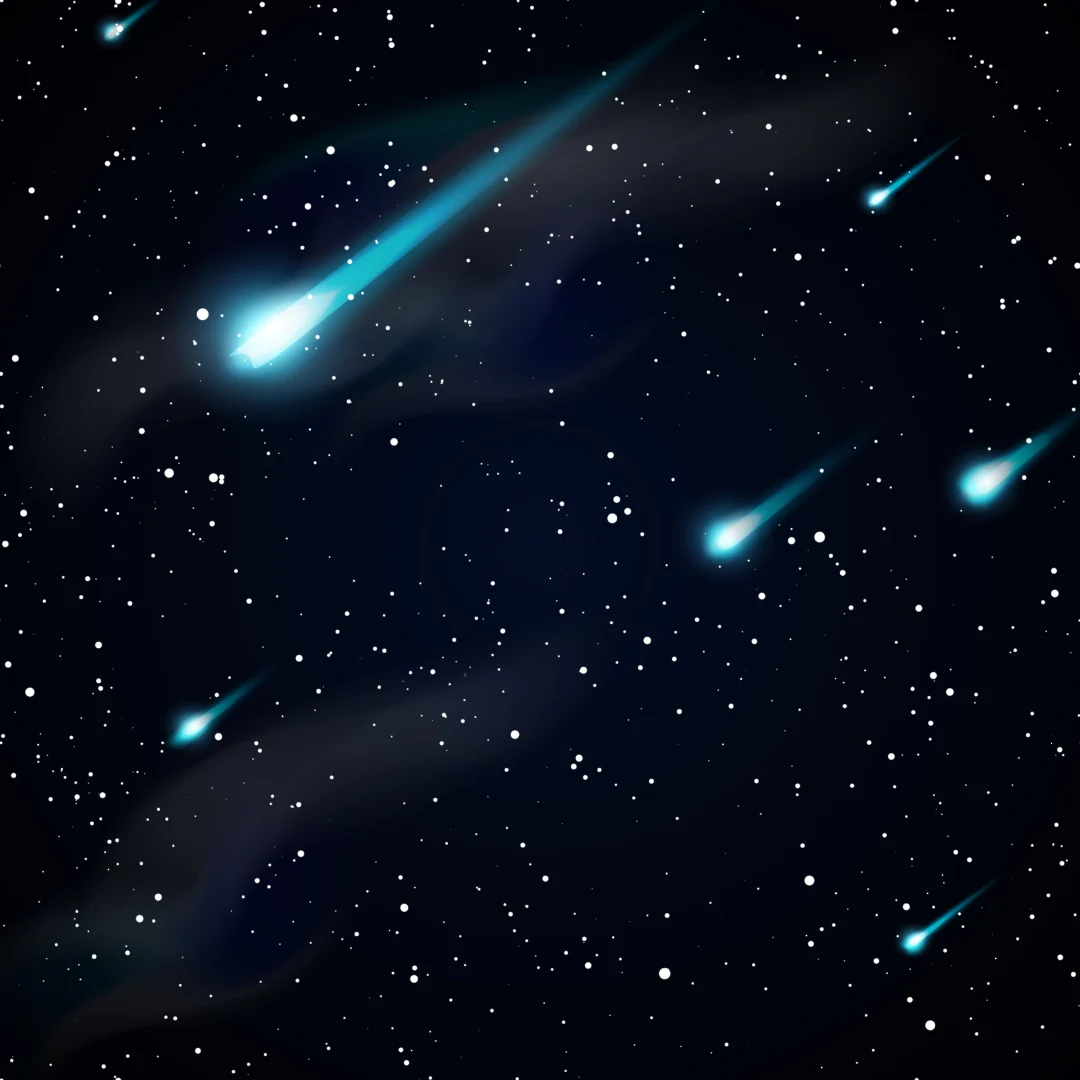
A shooting star is not really a star. It is a meteor, a tiny piece of dust or rock from space that enters Earth’s air at very high speed and burns up. As it burns, it makes a short, bright line across the sky.
Each time Halley’s Comet swings close to the Sun, about once every 76 years, the heat turns some of its ice into gas, and small bits of dust break off. Over thousands of years, that dust has spread out along the comet’s path. Every October, Earth passes through part of this dust trail, and the bits burn up in our sky.
Halley’s Comet itself was last seen from Earth in 1986. It is now very far away and will not come close to us again until 2061. Until then, its dust is the only part of Halley’s Comet that we can see.
The shower takes its name from Orion, a well-known group of stars, because the meteors appear to shoot out from that part of the sky. In fact, they can show up anywhere above you.
Orionid meteors are very fast. According to NASA, they hit Earth’s air at about 66 kilometres (41 miles) per second. Some leave a glowing line that stays in the sky for a few seconds after the meteor is gone. A few become fireballs, which are extra-bright meteors.
NASA says that in a dark place, far from city lights, you may see 10 to 20 meteors an hour at the peak. In towns and cities, you may see only a few. Moonlight also makes meteors harder to see, so the best time to look is after the Moon sets, at around 3 a.m., until the sky starts to get light.
You do not need a telescope or binoculars, just your eyes and some patience. NASA suggests lying on your back with your feet pointing southeast and giving your eyes about 30 minutes to get used to the dark.
If clouds hide the sky this week, there are still chances. The Orionids continue until November 7, so a few meteors can appear on other nights too. In May, Earth passes through another part of Halley’s dust trail, which creates a second meteor shower called the Eta Aquariids.
Sources: NASA, The Weather Network
This week, Earth ploughs through a stream of debris left behind by Halley’s Comet, and anyone awake before dawn may catch the results. The Orionid meteor shower, usually just called the Orionids, peaks in the early hours of Wednesday, October 21, and Thursday, October 22.
What we call a shooting star is really a meteor: a fleck of dust or rock that slams into the upper atmosphere at enormous speed and burns up in a brief streak of light. A meteor shower happens when Earth crosses a stretch of space crowded with these particles, producing far more meteors than on an ordinary night.
In the Orionids’ case, the particles were shed by Halley’s Comet. Roughly every 76 years, the comet swings in close to the Sun, and the heat turns some of its ice to gas, releasing grains of dust. Over many centuries, that material has spread along the comet’s orbit, and each October our planet passes through part of that dust trail.
The comet itself is a far rarer sight. Halley’s Comet was last visible from Earth in 1986 and is not due back in the inner solar system until 2061. Until then, its dust is the only part of it we can see.
The shower takes its name from the constellation Orion, because the meteors appear to radiate from a point near Betelgeuse, one of its brightest stars. They can streak across any part of the sky, however, so there is no need to stare in one direction.
Speed is what makes the Orionids stand out. NASA puts it at about 66 kilometres (41 miles) per second, fast enough that many meteors leave glowing trails, known as trains, that can linger for several seconds or even minutes. Now and then, one flares into a fireball, an exceptionally bright meteor.
It pays to keep expectations modest. Under dark skies, NASA estimates 10 to 20 meteors an hour at the peak, while in towns and suburbs, light pollution can cut that to a handful. Timing matters too: the Moon sets around 3 a.m., and the dark stretch between moonset and dawn offers the best viewing.
No special equipment is needed to watch the shower. In fact, binoculars and telescopes narrow your view of the sky. NASA recommends finding a spot away from city lights, lying back with your feet pointing southeast, and giving your eyes about 30 minutes to adjust.
Cloudy skies need not mean a missed chance. The Orionids remain active until November 7, and in May, Earth crosses another part of Halley’s debris trail, producing a second shower known as the Eta Aquariids.
Sources: NASA, The Weather Network