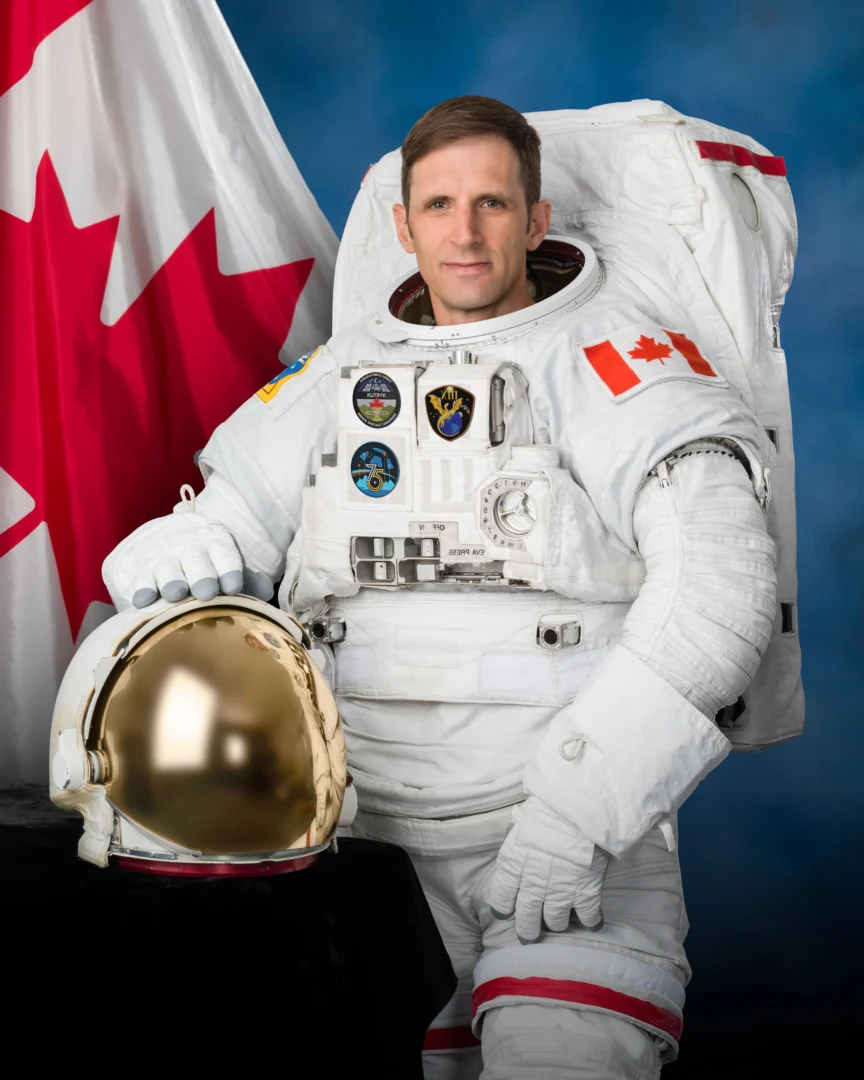
When Joshua Kutryk reached the International Space Station (ISS), he had to learn the simplest things all over again. Eating, sleeping, and moving around all felt new. “You have to sort of learn to do everything again, almost like you’re a child,” the Canadian astronaut said. He even had to think about what to do with his neck and his hands.
Kutryk, 44, grew up on a cattle farm in northern Alberta and later flew CF-18 fighter jets in the Canadian air force. On October 1, he and three other crew members left Florida on NASA’s Crew-13 mission, and they reached the station in just under eight hours. He will live and work there for six months, doing science experiments and helping to keep the station running.
On October 13, two weeks into his mission, Kutryk spoke live from space with reporters at the Canadian Space Agency in Longueuil, Quebec, near Montreal. He floated in front of the camera, showed one of the experiments he is taking part in, and said he was having a great time. “You just feel so lucky and fortunate to be living this experience,” he said.
Life in space also changes the human body. Kutryk has already lost more than two kilograms (five pounds). He explained that astronauts on six-month missions lose a lot of bone and muscle, which is a big worry for longer trips in the future. For this reason, he wears equipment for AstroFit, a Canadian-led project that follows astronauts’ health. Its goal is to help people stay in space for longer.
As a boy in Alberta, Kutryk often saw the northern lights. Now he sees them from above, glowing around the curve of the Earth. “It’s one of the most amazing things I’ve ever seen,” he said. Looking at the whole planet has also made him think. “It’s just one world. It’s one thing hanging in the blackness of space and you don’t see all the countries and the problems,” he said. “You just see this little bit of perfection that we should really, really be trying to protect.”
A piece of Kutryk’s family history is on the station with him. About four generations ago, his relatives moved from Ukraine and brought a pocket watch with them. That watch was sent up to the ISS before him, and he keeps it near the place where he sleeps. He said it makes him think about how much technology has changed, and how his ancestors could never have imagined his trip.
His mission comes just months after another Canadian astronaut, Jeremy Hansen, flew around the Moon on NASA’s Artemis II mission in April. Kutryk said it is important for Canada to have a place in space. “We take a lot of benefits from these missions and it’s something that we hope we can continue,” he said.
Image: Canadian Space Agency
Sources: Global News, The Canadian Press
When Joshua Kutryk reached the International Space Station (ISS), he had to relearn the simplest parts of daily life. Eating, sleeping, and even moving from one spot to another felt completely new. “You have to sort of learn to do everything again, almost like you’re a child,” the Canadian astronaut said. He even had to figure out what to do with his neck and hands.
Kutryk, 44, grew up on a cattle farm in northern Alberta and went on to fly CF-18 fighter jets in the Royal Canadian Air Force. On October 1, he and three crewmates lifted off from Florida on NASA’s Crew-13 mission, reaching the station in just under eight hours. He will spend six months there, running science experiments and helping to keep the station in good working order.
On October 13, two weeks into his stay, Kutryk spoke live from orbit with reporters gathered at the Canadian Space Agency in Longueuil, Quebec, near Montreal. Floating in front of the camera, he showed one of the experiments he is part of and said he was “having a blast.” “You just feel so lucky and fortunate to be living this experience,” he said.
Life in orbit is tough on the body, and Kutryk has already lost more than two kilograms (five pounds). “Humans on a six-month mission lose a lot of bone, a lot of muscle,” he said, calling it a major concern. That is why he wears equipment for AstroFit, a Canadian-led project that tracks astronauts’ health, with the aim of making longer spaceflights possible.
Kutryk grew up watching the northern lights in Alberta. Now he sees them from above, glowing around the curve of the Earth. “It’s one of the most amazing things I’ve ever seen,” he said. Taking in the whole planet at once has also changed how he thinks about it. “It’s just one world. It’s one thing hanging in the blackness of space and you don’t see all the countries and the problems,” he said. “You just see this little bit of perfection that we should really, really be trying to protect.”
A piece of family history was waiting for him when he arrived. About four generations ago, his relatives left Ukraine for Canada, bringing a pocket watch with them. That watch was sent up to the ISS ahead of Kutryk, and he now keeps it close to where he sleeps. Holding it, he said, makes him think about how far technology has come, and how his ancestors could never have imagined the journey he is on now.
His mission comes just months after another Canadian astronaut, Jeremy Hansen, flew around the Moon on NASA’s Artemis II mission in April, the first crewed trip to the Moon in more than 50 years. For Kutryk, having a Canadian on the station shows what the country can achieve when it aims high and accepts some risk. “It is important for Canada to be here,” he said. “We take a lot of benefits from these missions and it’s something that we hope we can continue.”
Image: Canadian Space Agency
Sources: Global News, The Canadian Press