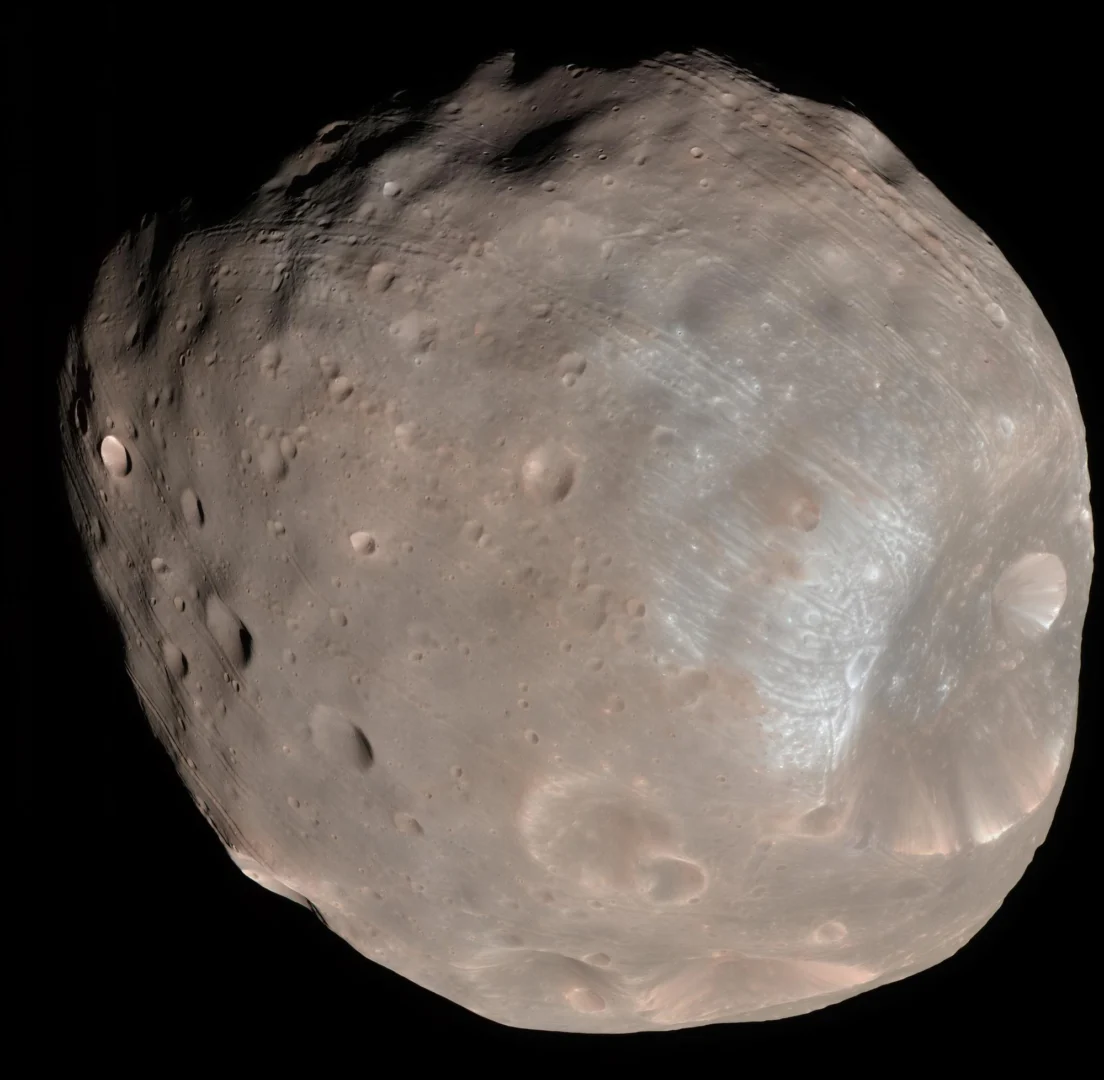
Japan has launched a spacecraft on a long trip to Phobos, one of the two small moons of Mars. If everything goes to plan, the spacecraft will land on Phobos, pick up some of its soil, and bring it back to Earth in 2031. Nobody has ever landed on the moons of Mars.
The spacecraft, called MMX, was carried into space on top of a large rocket from Tanegashima, an island in southern Japan, before sunrise on October 20. About an hour after launch, MMX separated from the rocket as planned and started its own journey toward Mars. Officials said the launch was a success. “There’s a lot of adrenaline and a lot of excitement and a lot of wow,” said Tom Statler, a NASA scientist.
Phobos is a lumpy rock shaped a bit like a potato, about 22 kilometres (14 miles) across. Scientists still do not know where it and Mars’s other moon, Deimos, came from. A large space rock may have crashed into Mars long ago, and the moons may have formed from the pieces that flew off. Or the two moons may be asteroids, rocky objects that travel around the Sun, that came too close to Mars and were caught by its gravity. Kiyoshi Kuramoto, the mission’s lead scientist, said the soil from Phobos should almost certainly answer the question. The answer could also teach scientists more about the early history of Mars.
Phobos also circles very close to Mars, and scientists expect a very small part of its soil to have come from Mars itself. No spacecraft has ever brought back material from Mars. The samples could even help experts decide whether Phobos might one day be a useful stop for astronauts on their way to Mars.
The trip to Mars will take about 10 months. Once there, MMX will first drop a small rover called Idefix onto Phobos. The rover was built by France and Germany and named after the little white dog in the Asterix comics. Idefix is no bigger than a microwave oven and moves about one millimetre per second. For around 100 days, it will check the ground so that MMX knows which soft, powdery or rough areas to avoid when it lands.
Later, MMX itself will touch down, but only for two hours. In that short time, it will drill and vacuum up at least 10 grams (about one-third of an ounce) of soil. After flying past Deimos a few times, MMX will leave Mars in 2030, and its capsule should land in the Australian desert a year later.
The mission will not be easy. Russia tried to reach Phobos three times and failed every time. But Japan has done something similar before: its two Hayabusa spacecraft brought back pieces of two asteroids in 2010 and 2020. Five space agencies, including NASA and the European Space Agency, are working on MMX, which costs 578 million U.S. dollars (about 825 million Canadian dollars). “It is a once-in-a-lifetime chance,” said Markus Grebenstein, who leads the rover team at the German Space Agency.
Sources: AP, Space.com
Japan has launched a spacecraft toward Phobos, the larger of Mars’s two small moons, on a mission that could solve a puzzle scientists have argued about for decades. If all goes to plan, it will become the first spacecraft to land on a moon of Mars, scoop up some of its soil, and deliver it to Earth in 2031.
The spacecraft, called MMX (short for Martian Moons eXploration), lifted off on Japan’s H3 rocket from Tanegashima, an island in southern Japan, before dawn on October 20. Seventy-one minutes later, it separated from the rocket as planned, and officials declared the launch a success. “There’s a lot of adrenaline and a lot of excitement and a lot of wow,” said Tom Statler, a NASA astrophysicist.
Phobos is a lumpy, potato-shaped rock about 22 kilometres (14 miles) across, and nobody knows for sure how it, or its smaller sibling Deimos, ended up circling Mars. One theory holds that a large object slammed into Mars long ago and the moons formed from the debris. The other is that they began as asteroids, rocky bodies that orbit the Sun, and were captured by Mars’s gravity when they strayed too close. The lead scientist, Kiyoshi Kuramoto, believes the soil can settle the debate, which would also shed light on the early history of Mars.
Phobos matters for another reason, too. Because it orbits so close to Mars, scientists expect about 0.1 per cent of the material MMX collects to have come from the planet itself. No spacecraft has ever brought back material from Mars. The samples could also help experts judge whether Phobos might one day serve as a base for astronauts heading to Mars.
MMX should reach Mars in August 2027. Before it tries to land, it will drop a four-wheeled rover called Idefix onto Phobos. Built by France and Germany and named after the little white dog in the Asterix comics, Idefix is about the size of a microwave oven. On landing, Idefix will bounce for several minutes before it settles. Crawling at about a millimetre per second, it will then spend roughly 100 days looking for powdery soil and rough ground, so that MMX knows which areas to avoid when it lands.
The landing itself will be brief. On its first visit to the surface, MMX will have just two hours to collect at least 10 grams (about one-third of an ounce) of soil, using two different tools: a NASA device that uses bursts of gas to push surface dust into a container, and a Japanese tool that digs about two centimetres (less than an inch) into the ground. MMX will then land a second time to gather more soil from below the surface. After several flybys of Deimos, it will leave Mars in 2030. Its capsule is due to land in the Australian desert a year later, and the samples will then be taken to Japan.
Success is far from guaranteed. Russia failed in all three of its attempts to reach Phobos. But Japan has done something like this before: its Hayabusa and Hayabusa2 probes brought home dust from two asteroids in 2010 and 2020. MMX is led by Japan’s space agency, which is working with NASA, the European Space Agency, and the space agencies of France and Germany. The mission costs US$578 million (C$825 million). “It is a once-in-a-lifetime chance,” said Markus Grebenstein, who leads the rover team at the German Space Agency. “We are part of the first sample return mission from the Martian system.”
Sources: AP, Space.com