Growing Language Through Shared Work
A community garden is one of the few places where learning happens without anyone calling it a lesson. People arrive with gloves, tools, and a sense of purpose. They kneel beside strangers, trade advice about soil or watering, and slowly turn an empty patch of ground into something that feeds everyone involved. For English learners, this setting offers language that grows naturally out of shared tasks.
Gardening brings people into contact with real objects and real actions. Learners talk about soil that feels too dry, plants that need more space, or tools that make the work easier. These conversations help them use English in a way that feels direct and practical. The vocabulary is tied to things they can touch, which makes it easier to remember.
Community gardens also create opportunities for cooperation. Someone might ask for help lifting a bag of compost or checking whether a plant is ready to harvest. These small exchanges teach learners how to make requests, offer assistance, and respond politely. The language is simple, but the interaction feels genuine.
Another benefit of this topic is the variety of perspectives it brings out. People often grow plants that remind them of home. They talk about vegetables their families cook with, herbs they grew up smelling in their kitchens, or flowers that carry personal meaning. These stories help learners connect with one another while practicing English that reflects their own experiences.
A garden also encourages observation. Learners notice how plants change over time, how weather affects growth, or how different techniques lead to different results. Talking about these changes helps them practice descriptive language in a grounded, concrete way.
Community gardening may look like a hobby, but it teaches patience, cooperation, and care. When learners talk about these experiences, they practice English that feels useful both inside and outside the classroom.
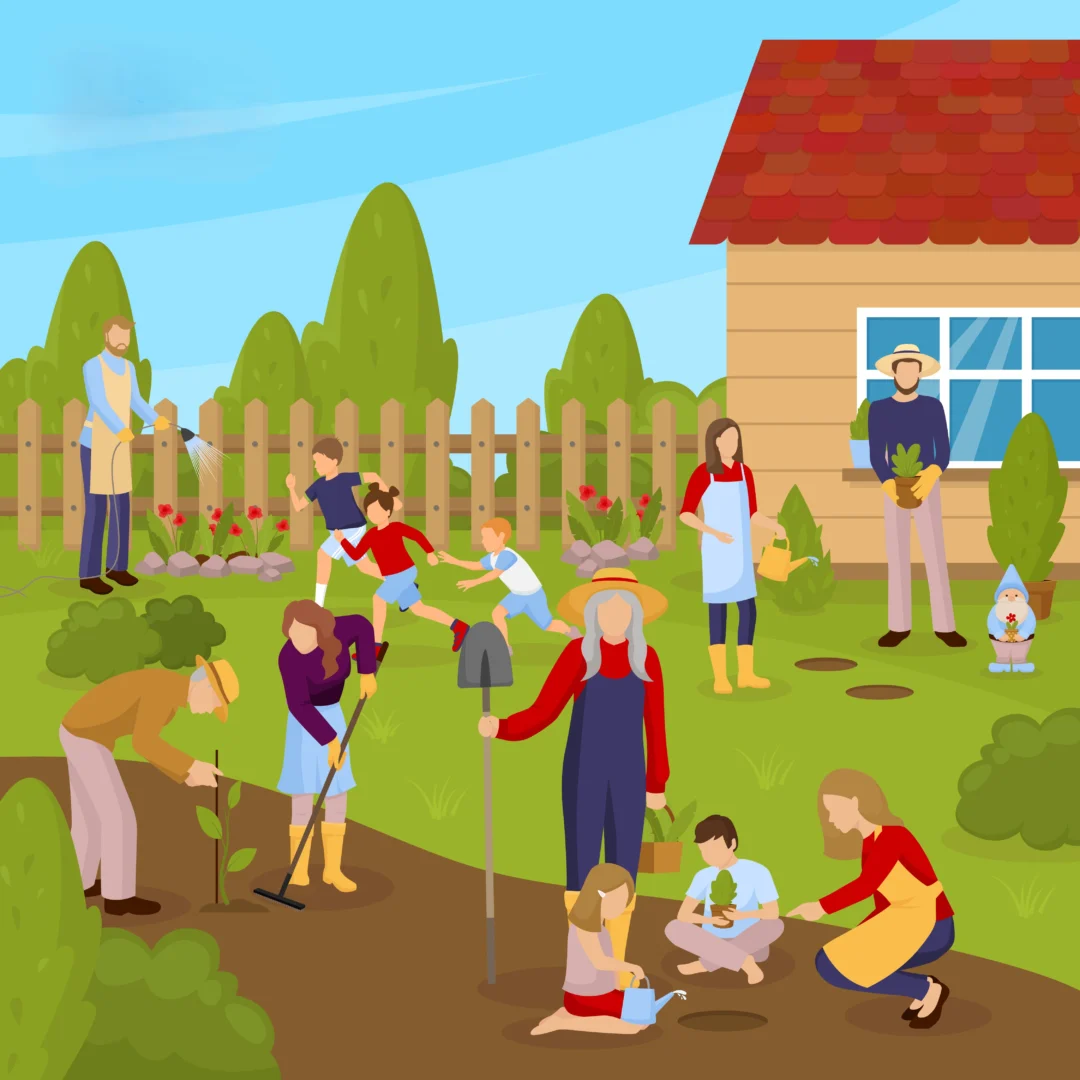
Add the community gardening images to your materials and use them as prompts for hands‑on thinking. Ask students to plan a small garden based on what they see, choose which plants would thrive together, or outline the steps needed to care for a shared plot. The images become starting points for decision‑making, not observation, giving learners a chance to use English while solving real, practical tasks.