Exploring English Through Life under the Open Sky
Camping brings people into a world that feels simple and unpredictable at the same time. There is the quiet of early morning, the smell of wood smoke, the slow work of setting up a place to sleep. These moments create a natural setting for language because everything happens step by step, and each action has a purpose.
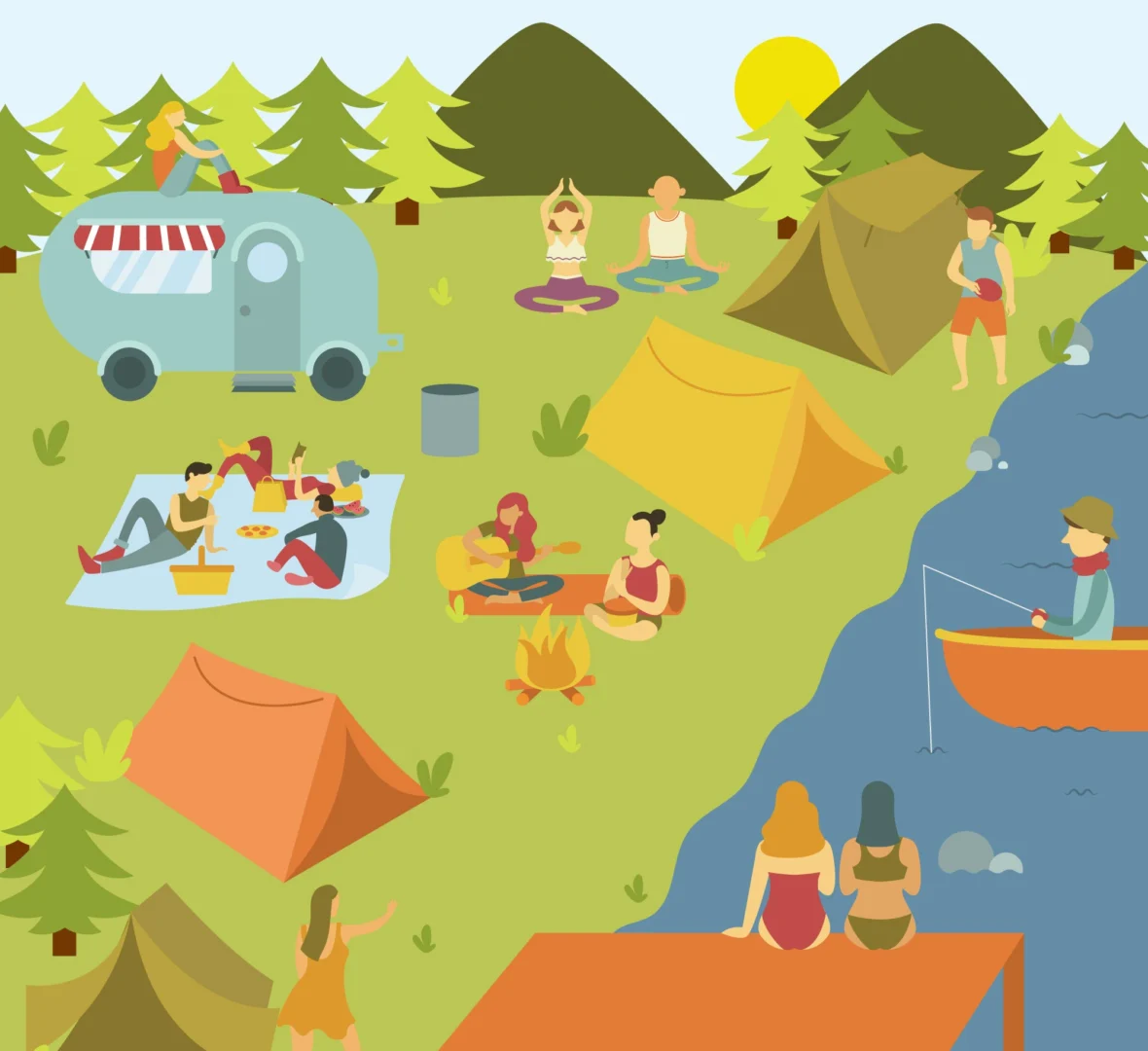
For English learners, camping introduces vocabulary that is tied to real movement. Pitching a tent, unrolling a sleeping bag, lighting a stove, or finding a trail all involve clear actions that are easy to demonstrate. Students can talk about what they are doing with their hands, what they notice around them, and how they prepare for the day. This kind of language feels grounded because it comes from doing, not memorizing.
Camping also encourages storytelling. People rarely go on a trip without coming back with a memory worth sharing. Maybe it rained all night. Maybe someone forgot the matches. Maybe the stars were brighter than they expected. When students tell these stories, they practice past tense naturally and learn how to describe events in a way that feels personal and real.
The topic also helps learners talk about comfort, challenge, and problem‑solving. They can explain how they stayed warm, how they found their way, or how they worked together to set things up. These conversations build vocabulary for cooperation and planning, which is useful far beyond the campsite.
In class, camping can spark curiosity even among students who have never tried it. They can imagine what it would be like to sleep outdoors or cook over a small flame. They can talk about places they would like to visit or landscapes they remember from home. These discussions help them practice descriptive language in a relaxed, imaginative way.
Camping is more than an outdoor activity. It’s a chance to slow down, notice small details, and share experiences that feel honest and memorable. When students learn the language for these moments, they gain tools to express themselves with clarity and confidence.
Add this set of camping visuals to your teaching library and give your students a new way to explore English through nature, movement, and shared adventure.